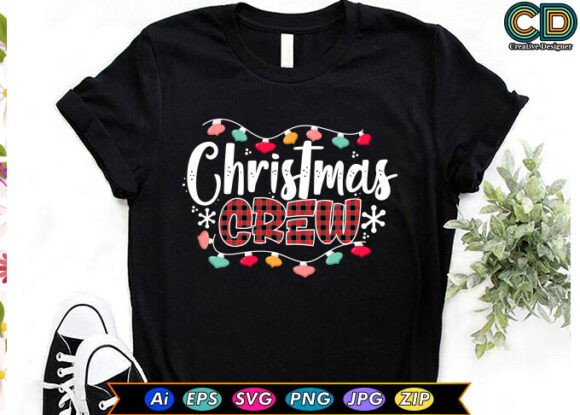
A Designer's Review of the Christmas Crew T-Shirt Design
When a holiday-themed design lands in my studio, my first instinct isn't to admire it on screen—it’s to imagine it stitched onto fabric. That’s the lens I’m using for Christmas Crew Christmas T-Shirt Designs. This isn’t a basic product description; it’s a practical evaluation of how this graphic would perform as a real embroidery project, from my hoop to a customer’s hands.
The Immediate Mood & Where It Belongs
Opening the files, the “Christmas Crew” title sets a playful, communal tone. It’s not a formal, solitary snowflake; it feels like a group of friends or family celebrating together. The layout likely supports this, with elements that are probably friendly and integrated rather than stark and separate. This visual personality makes it a natural fit for projects meant to feel personal and warm. I instantly picture it on a cozy sweatshirt for a holiday gift, or as a charming addition to a custom apron for festive cooking. The mood it creates is welcoming, which is exactly what you want for holiday embroidery aimed at gifts or small shop merchandise.
From Digital File to Stitched Reality
The provided formats—especially the editable AI, SVG, and EPS files—are a significant advantage for an embroidery designer. This isn’t just a static image; it’s a design asset I can adapt. Before it ever touches a hoop, I can tweak elements in a vector program to suit my specific embroidery project. Perhaps I want to isolate a part of the “Crew” for a smaller embroidered patch, or adjust a detail to work better on a curved surface like a cap. Having editable source files means the design can live beyond a single t-shirt application.
But the real test is in the stitching. Let’s walk through a real scenario: I’m preparing a custom embroidered tote bag as a boutique holiday product. I need the design to hold its clarity and cheerfulness on canvas. The high-quality JPG and transparent PNG are perfect for creating printable mockups for my Etsy listing, but for the machine, I’d be working from the vector files converted to an embroidery file. The detail level shown in the graphics will dictate the stitch count. Areas with fine lines or small text within the “Crew” theme would require careful attention to stitch density and possibly a satin stitch to maintain clarity on a textured fabric like tote bag canvas. A design that’s too dense might become stiff; one that’s too sparse might look weak. The balance is key.
Where This Design Would Shine & Sell
Thinking like a crafter and a seller, I see several strong applications. For baby embroidery on a festive sweater or blanket, the playful “Crew” theme could be delightful, assuming the elements are sized appropriately and not too intricate for smaller garments. As a personalized gift, like a pillow cover or kitchen towel, it adds a handmade, festive touch that feels more special than store-bought. For a craft business, this design could become a core part of your holiday line—consistent branding across sweatshirts, totes, and aprons creates a cohesive collection that buyers trust.
The visual appeal after stitching directly impacts product value and customer trust. A clean, well-executed embroidery of a cheerful design like this makes a product look professional and desirable. It enhances giftability and recognition. A customer browsing an Etsy shop or craft fair stall connects with the mood first; the quality of the physical stitching confirms their purchase decision.
Considerations & Careful Application
No design is universally perfect for every substrate. Here’s where practical judgment comes in. If the “Christmas Crew” design contains very small lettering or intricate decorative accents, I’d be cautious using it on very small hoop sizes. Those details might get lost or become muddy. Similarly, on highly textured fabrics or stretchy fabric like certain knits, fine details require excellent stabilizer and possibly a test run to ensure they don’t distort.
Dark fabric is a classic consideration. The design’s inherent contrast in the provided files might look great on a white mockup, but on a navy sweatshirt, you need to plan your thread colors carefully to maintain that cheerfulness and clarity. Layered garments with seams or curves, like caps, demand even more planning—how will the design flow over the curve? Does the layout accommodate a centered, curved surface?
And for products destined for frequent washing, like apparel or towels, the stitch integrity and density matter for longevity. A design with large, dense fill stitch areas might be more robust than one with many thin, single running stitch lines, which could be more vulnerable. This is where testing is non-negotiable.
Practical Notes From the Worktable
Before committing this design to a client project or listing it in my shop, here is my actionable checklist. First, always test the design on scrap fabric first. Use the same fabric and stabilizer you intend for the final product. This reveals everything: how small details translate, how the stitch density feels, and whether your chosen hoop size works.
Check thread color contrast against both light and dark backgrounds. Don’t rely on the screen preview. Inspect those small details closely after stitching—are they clear? I also recommend testing it in black and white mockups to see the form stripped of color; this can highlight layout strengths or weaknesses. And crucially, use proper stabilizer for your specific fabric; it’s the foundation of a clean finish.
Finally, a vital step for any digital embroidery file or graphic used commercially: confirm licensing before selling finished items or digital products. The product description states it’s a Print Template and Graphics product, but the terms for using the resulting embroidery on physical goods for sale must be clear. This protects your craft business and ensures you’re using the asset correctly for commercial embroidery projects.
The Final Impression for Makers & Entrepreneurs
The Christmas Crew Christmas T-Shirt Designs, from a designer’s perspective, presents a solid foundation for festive projects. Its editable nature offers flexibility, and its cheerful theme suits the holiday market perfectly for embroidery designers, Etsy sellers, and creative entrepreneurs. Its success, however, will be determined not by the files on your computer, but by the thoughtful application of embroidery technique. It asks you to consider fabric, scale, and context.
When executed with care—with proper testing, thoughtful material pairing, and clear licensing—this design can transform into a high-value, handmade product that captures the spirit of the season. It can become the standout holiday gift in a boutique, the beloved personalized item in a customer’s home, or a reliable part of your annual holiday product line. The digital asset is the starting point; your skill and attention to real-world stitching details will bring the “Christmas Crew” to life.